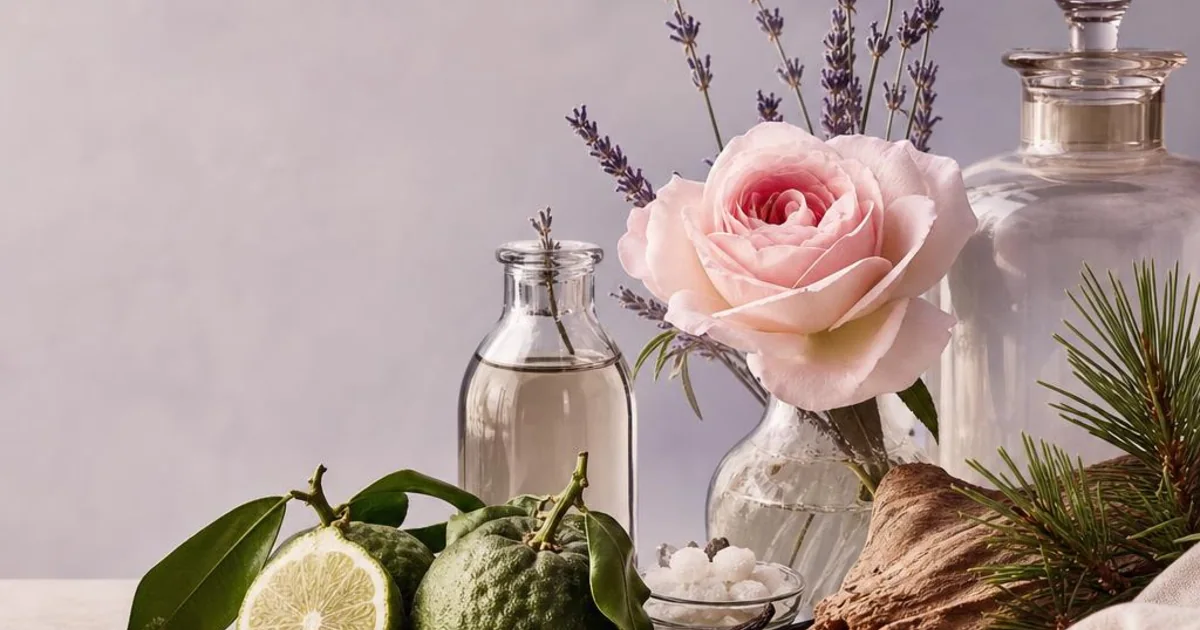
Short answer: The best perfume notes to layer together either share a bridge note—such as musk, amber, or woods—or create a clear, controlled contrast, like bright bergamot over warm vanilla.
Reliable note pairings
Rose plus musk, vanilla plus sandalwood, amber plus cedar, bergamot plus neroli, jasmine plus clean woods, and vetiver plus grapefruit are dependable starting points.
Shared notes versus contrasting notes
Shared notes create cohesion. Contrasting notes create energy. Use one or two shared anchors first, then introduce contrast through a bright top note, dry wood, fresh herb, or subtle spice.
Notes to approach with restraint
Very sweet praline, smoky leather, medicinal oud, animalic musk, and sharp green notes can dominate quickly. Pair them with a simpler supporting scent and keep the ratio at 3:1.
Read the dry-down, not just the note list
Listed notes are a useful map, but the actual materials and concentration determine the result. Wear a pairing for at least an hour before deciding it belongs in your rotation.
Try the idea with your own collection
Use MixMode to compare two fragrances with a live compatibility analysis, suggested spray ratio, shared notes, contrasting notes, and a predicted dry-down.
Mix This Fragrance in MixMode →
Frequently asked questions
What is the best way to start with perfume notes that layer well together?
Use two fragrances only, choose a clear lead scent, and start with a 2:1 ratio.
Do perfume layering combinations last longer?
They can. A woody, amber, musk, or vanilla base can give a lighter top layer more structure through the dry-down.
Should you test perfume notes that layer well together on paper or skin?
Use skin. Paper helps you compare openings, but body heat and skin chemistry determine how a layered combination actually develops.