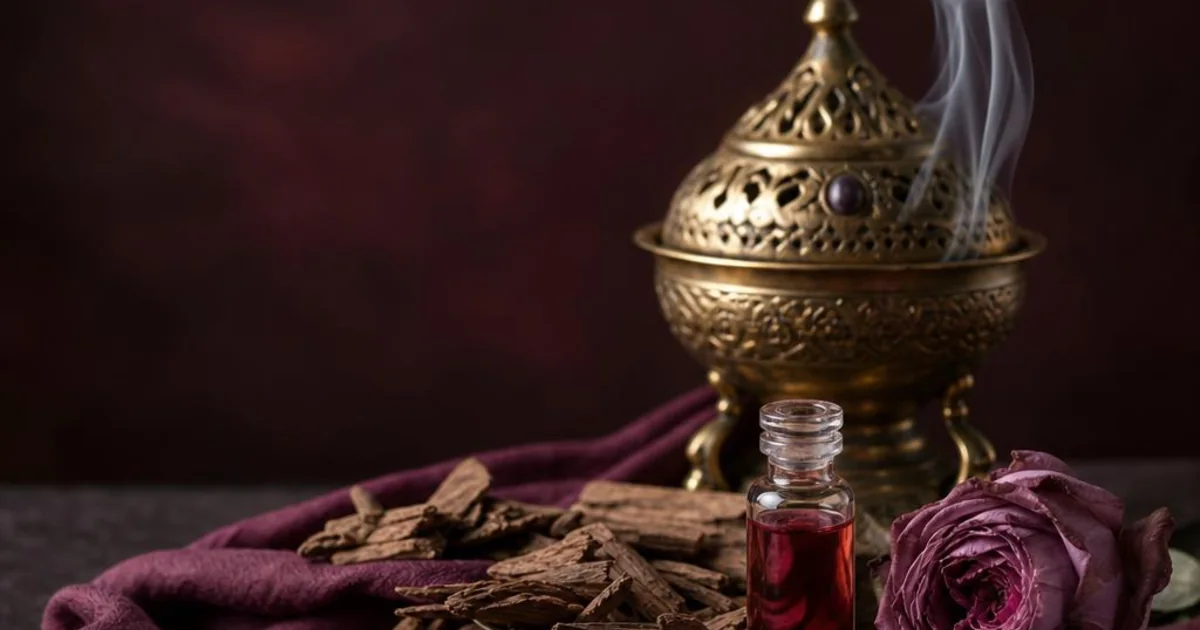
Short answer: Layer Middle Eastern fragrances by treating oud, attar, bakhoor-inspired accords, amber, and concentrated musks as the base, then using a floral, citrus, or clean musk accent sparingly.
Start with concentration and projection
Many Middle Eastern fragrances are dense, oil-rich, or built around long-lasting materials. One spray or dab can do the work of several sprays of a lighter eau de toilette, especially in warm rooms.
Oud, rose, amber, and musk combinations
Oud and rose make a classic deep floral pair. Amber and vanilla bring warmth to dry woods. Clean white musk can soften a medicinal or leathery oud without removing its character.
How to use attar and bakhoor-inspired scents
Apply a small amount of attar to moisturized skin first, or wear bakhoor-inspired incense profiles as a single base layer. Add an airy fragrance only after the oil has settled.
When to wear a bolder layered scent
Reserve the fullest amber, oud, and resin combinations for cold weather, outdoor evenings, celebrations, or spaces where stronger projection is welcome.
Try the idea with your own collection
Use MixMode to compare two fragrances with a live compatibility analysis, suggested spray ratio, shared notes, contrasting notes, and a predicted dry-down.
Mix This Fragrance in MixMode →
Frequently asked questions
What is the best way to start with how to layer Middle Eastern fragrances?
Use two fragrances only, choose a clear lead scent, and start with a 2:1 ratio.
Do perfume layering combinations last longer?
They can. A woody, amber, musk, or vanilla base can give a lighter top layer more structure through the dry-down.
Should you test how to layer Middle Eastern fragrances on paper or skin?
Use skin. Paper helps you compare openings, but body heat and skin chemistry determine how a layered combination actually develops.