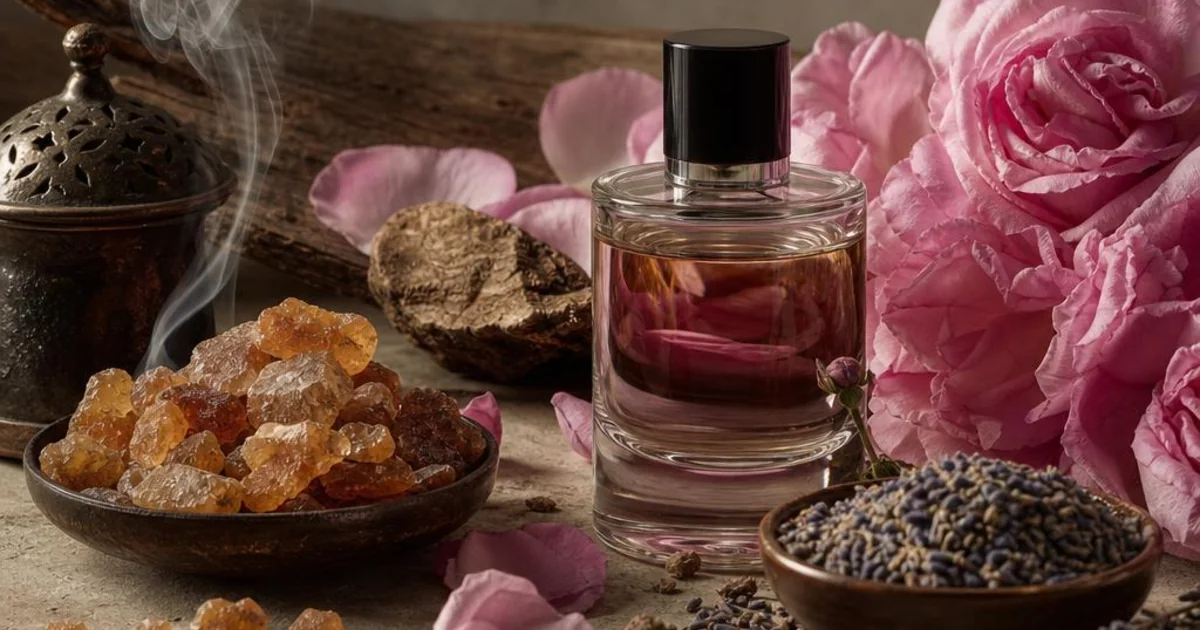
Ancient origins — scent as ritual
The word "perfume" comes from the Latin per fumum — "through smoke." The oldest known use of fragrant materials involved burning aromatic resins, woods, and herbs in religious and funerary rituals. Ancient Egyptians were among the earliest sophisticated users of scent: they burned kyphi (a compound of resins, juniper, myrrh, and other materials) in temples, and embalmed their dead with aromatic oils. The cedar and myrrh used in those rituals remain in use in modern perfumery.
Liquid perfumery — alcohol changes everything
Early liquid fragrances were oil-based. The shift to alcohol-based perfume — which carries aromatic materials much more effectively and volatilises predictably — happened gradually through the medieval period as distillation technology developed. Hungary Water, considered one of the earliest alcohol-based fragrances, appears in records from the 14th century.
Grasse and the rise of French perfumery
By the 17th century, the town of Grasse in the south of France had become the centre of European perfumery, using locally grown flowers — rose, jasmine, lavender, mimosa — that thrived in the Mediterranean climate. The relationship between Grasse flower growers and Parisian perfume houses shaped the structure of the fine fragrance industry that still exists today.
Synthetic molecules — the 20th century revolution
The most significant development in modern perfumery was the ability to synthesise aromatic molecules in a laboratory. The first notable example was coumarin, used in Fougère Royale (1882), which created the fougère family. Synthetic musks, aldehydes (famously used in Chanel No. 5, 1921), and later aroma chemicals like Iso E Super and ambroxan transformed what was possible. Ingredients that don't exist in nature, or exist only in tiny quantities, became foundational materials.
Modern fragrance culture
The late 20th century saw fragrance become a mass-market consumer product, with designer houses, celebrity fragrances, and department store launches. Alongside this, a dedicated fragrance community — enthusiasts, collectors, and niche houses — developed its own language, culture, and appreciation for perfumery as craft. Online communities and platforms like SCNTMIX have made fragrance knowledge more accessible than at any previous point in history.