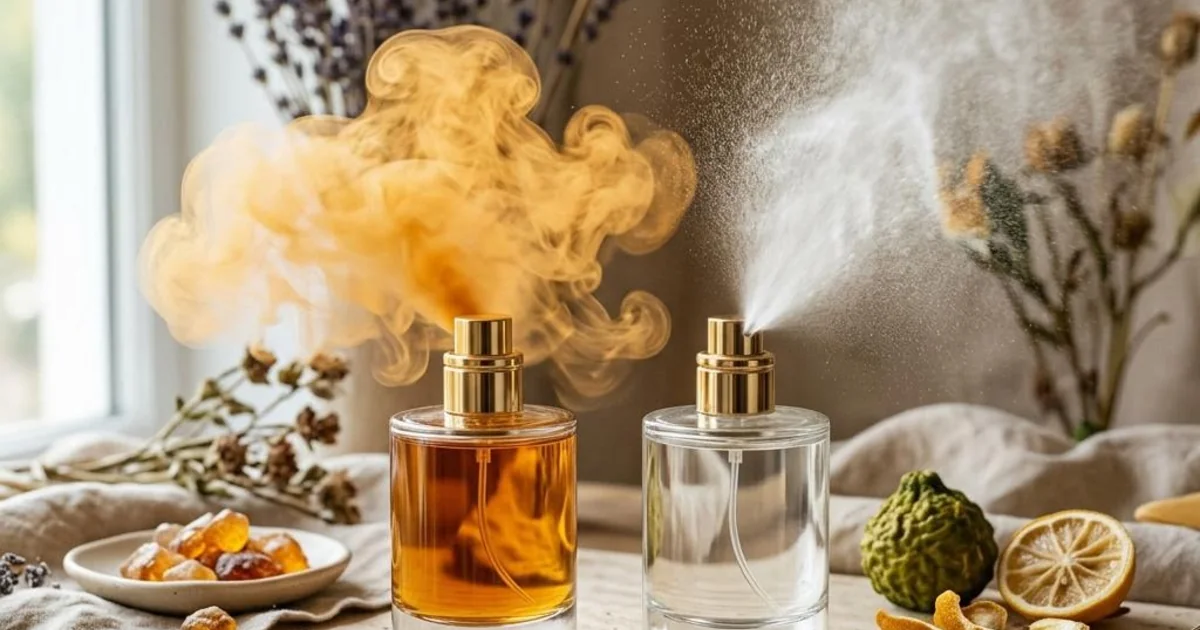
Concentration is the core difference
Eau de Parfum (EdP) typically contains 15–20% aromatic compounds; Eau de Toilette (EdT) typically 5–15%. The rest is primarily alcohol, with a small amount of water. More aromatic compounds means more intense projection, deeper base notes, and longer longevity.
How they perform differently on skin
An EdT of the same fragrance versus its EdP version rarely smells identical — different concentrations can shift which notes are most prominent. EdTs often feel brighter, airier, and more citrus-forward. EdPs of the same fragrance tend to be denser, warmer, and more base-heavy. Some perfumers deliberately create the EdT and EdP as different interpretations of the same concept rather than simply scaling the concentration up or down.
Longevity expectations
- EdT: 3–5 hours on most skin types. Ideal for office environments, warmer weather, or situations where lighter projection is appropriate.
- EdP: 6–10 hours. Better for evening wear, colder weather, or when you want the fragrance to project and last without reapplication.
Skin type matters too
Dry skin typically has less natural oil to hold fragrance molecules and often gets shorter longevity from both EdT and EdP than oily skin does. If you find fragrances fade quickly on your skin, moisturising before applying (an unscented lotion works well) can extend longevity by several hours — sometimes more than upgrading concentration alone.
For layering
EdPs make better base layers because their density and longevity anchor the combination. EdTs often work well as lighter top layers in a combination, adding brightness to an opening that then reveals the richer base underneath. The MixMode notes concentration as part of its compatibility analysis.