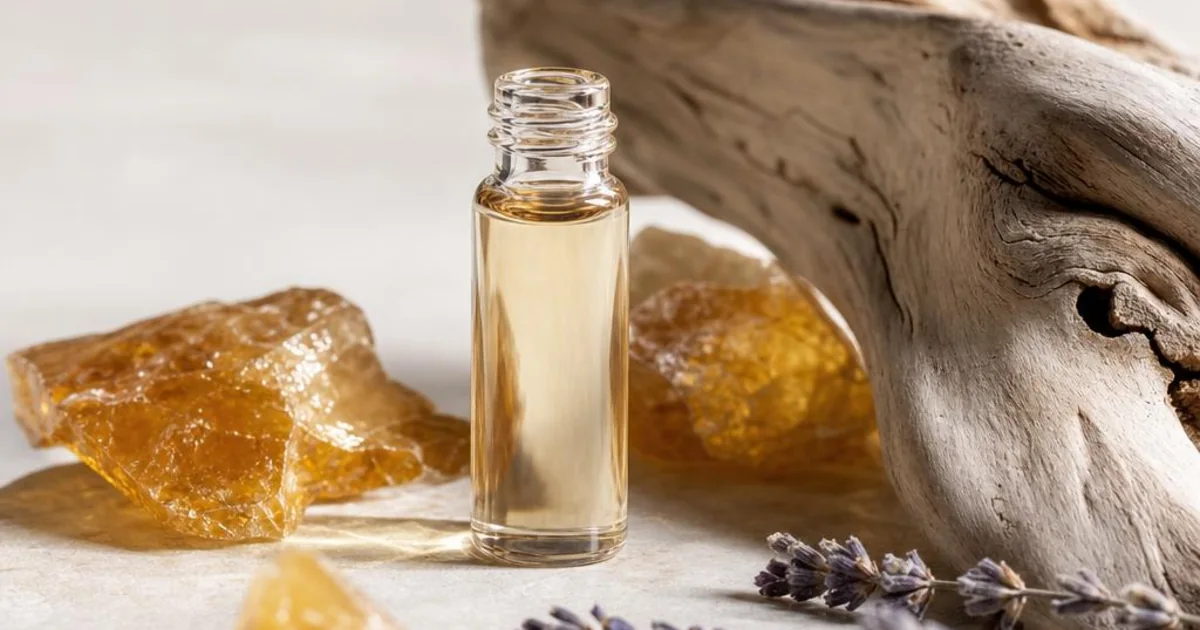
What ambroxan is
Ambroxan (also spelled ambroxide, technically called dodecahydro-3a,6,6,9a-tetramethylnaphtho[2,1-b]furan) is a synthetic aroma chemical derived from ambergris — the waxy substance produced in the digestive system of sperm whales and historically one of the most prized ingredients in perfumery. Modern ambroxan is produced synthetically using sclareol, a compound derived from clary sage, making it both abundant and ethically unproblematic.
How it smells
Ambroxan has a warm, woody, slightly sweet, and distinctly skin-like character. It's often described as ambery, musky, and clean all at once. One of its most distinctive properties is that it interacts with individual skin chemistry, which is why fragrances built around it smell different on different people. On some skin types it becomes almost undetectable to the wearer (due to a phenomenon called olfactory fatigue specific to this molecule) while projecting significantly to others nearby.
Why it appears in so many fragrances
Ambroxan is a fixative — it extends the longevity of other aromatic materials by slowing their evaporation. It also has strong skin affinity, meaning it bonds closely with skin rather than dispersing into the air. These qualities make it invaluable to perfumers who want long-lasting, skin-close fragrances. It also amplifies other materials around it, which is why relatively small concentrations can have a significant effect on a composition's character.
Notable fragrances featuring ambroxan
Ambroxan is the dominant structural molecule in Baccarat Rouge 540 (Maison Francis Kurkdjian), Molecule 02 (Escentric Molecules), Pegasus (Parfums de Marly), and Erba Pura (Sospiro), among many others. Molecule 02 is essentially ambroxan in isolation — it exists to demonstrate what the molecule smells like on its own and on different skin types.
Explore fragrances that feature ambroxan prominently in the SCNTMIX catalog, or use MixMode to find how ambroxan-heavy fragrances layer with others.